








What is a long-term liability?

Think of them as the “big picture” debts that take contribution margin time to settle, like a mortgage or a car loan for individuals, but on a business scale. Loans are agreements between a borrower and lender in which the borrower agrees to repay the loan over a period of time, usually with interest. The below graph provides us with the details of how risky these long term liabilities accounting are to the investors. As a small business owner, you’re going to incur different types of liabilities as you operate.
Credit lines
Note also that this type of financing is usually more expensive in the long run than other options like short term loans. Tax-related liability accounts are important because they represent a company’s obligation to pay taxes to the government. It is https://www.bookstime.com/articles/how-to-make-a-balance-sheet important for companies to accurately calculate and record their tax liabilities to avoid any issues with the government. In addition to accounts payable, businesses may also have liability accounts for customer deposits. For example, a rental car company may require a deposit from a customer to secure a reservation. The deposit is recorded as a credit to the liability account, and the corresponding transaction is recorded as a debit to the cash account.
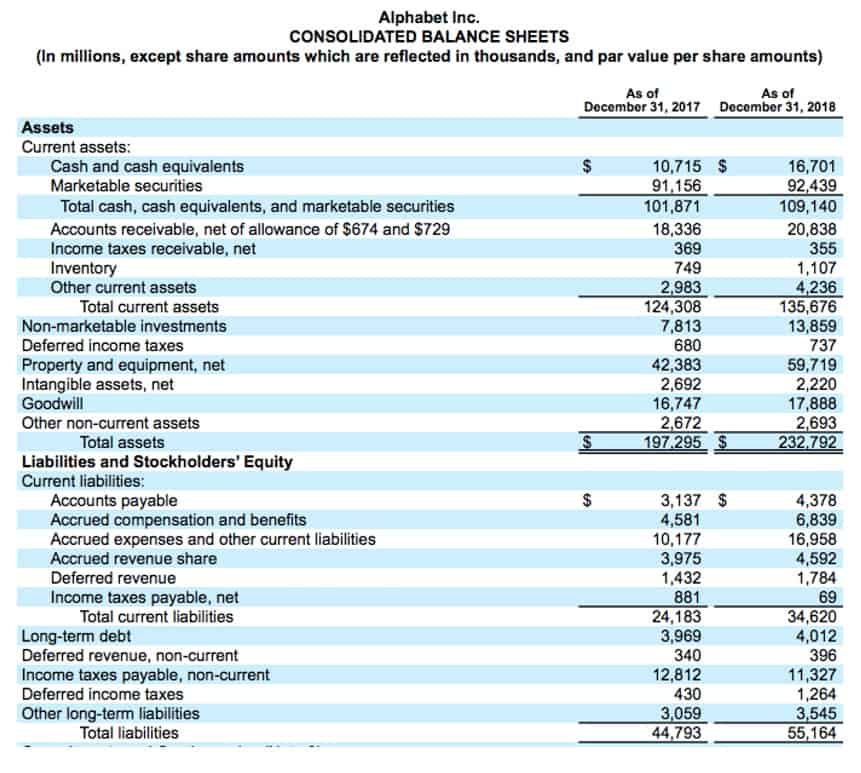
What are the different types of liabilities in accounting?
- It is important for companies to accurately calculate and record their tax liabilities to avoid any issues with the government.
- It is also convenient to compare the current assets with the current liabilities.
- Examples of current liabilities include accounts payable, notes payable, salaries payable, taxes payable, interest payable, and short-term loans.
- And if your business does have debt, you’re going to have liabilities.
- A formal, written promise to pay interest and to repay the principal amount.
You can calculate your business equity list of long term liabilities by subtracting the liabilities from the assets. The long term liabilities that you have listed on your balance sheet show the level of integrity of your business. If you are showing larger debts than equity, this is not good at all. Key persons such as investors will question the efficiency of your operations. The lack of confidence that this generates can spell more trouble down the line.

Liabilities and business decisions
- Useful life is used in computing depreciation on an asset, instead of using the physical life.
- The most familiar types of liabilities arise in those situations where specific amounts of money are owed by an entity to specific persons called creditors.
- Contingent liabilities arise from the risks businesses face, such as lawsuits or warranty claims.
- The good news is that for a loan such as our car loan or even ahome loan, the loan is typically what is called fully amortizing.
- A contingent liability only gets recorded on your balance sheet if the liability is probable to happen.
- It could be anything, from repaying its investors to paying a courier delivery partner just a modest sum.
- Businesses often negotiate favorable terms, such as reduced interest rates or flexible repayment schedules, to minimize costs.
These debts are usually in the form of bonds and loans from financial institutions. A liability is a financial obligation that a company owes to others. It can be an amount due to a vendor, employee, or lender, among others. Liabilities are recorded on the balance sheet and are categorized as either current or long-term. Current Portion of Long-term Debt is the amount of principal due on liabilities in the next twelve months. It is separated out from the full amount of long-term liabilities to help a business understand the amount of debt payments due in the near future.
Loans Payable:
- Goodwill is a long-term (or noncurrent) asset categorized as an intangible asset.
- Let’s look at a historical example using AT&T’s (T) 2020 balance sheet.
- This account may be an open credit line between thesupplier and the company.
- Sales taxes payable are amounts collected from customers for taxes owed to the government.
- Current Portion of Long-term Debt is the amount of principal due on liabilities in the next twelve months.
- Contingent liabilities are a vital example of long-term liabilities, showing potential obligations that depend on future events.
This is why it’s important to understand what liabilities are since they play a critical role in your business. This principle is essential to remember, especially when considering the balance sheet. These are all types of accounts and are the three essential parts of the accounting equation. This ratio can tell you what percent of your operations are funded by liabilities versus equity. Essentially, if you are indebted to someone and are obliged to pay them back for a service or good they provided, it’s a liability.

Contingent liabilities are those liabilities that may or may not arise depending on the outcome of a future event. There are three primary classifications when it comes to liabilities for your business. To make informed decisions, track your liabilities carefully, manage them effectively, and align them with your business goals. Liabilities with a known dollar amount are those that he will be required to cover. For example, an arrangement, a contract, or the law may produce these liabilities.
However, such liabilities are commonly met using the profits, investment income, or liquidity obtained from new loan agreements. These liabilities are typically recorded on the balance sheet and can have a significant impact on the financial statements and overall performance of the company. Liabilities are an important component of a balance sheet because they represent the sources of financing for a company’s assets. A company’s ability to meet its financial obligations is often evaluated by analyzing its liabilities and comparing them to its assets, cash flows, and income. Excessive liabilities can strain your cash flow and impact your ability to meet short-term obligations. By properly managing liabilities you can handle debt repayments, avoid financial difficulties, and make informed investment decisions.